Introduction: The Quiet Moment When Interiors Start to Lose Their Edge
Interior design rarely collapses in a single decision. It fades.
A ceiling is lowered to clear services.
A lighting layout is simplified to meet procurement.
A material is swapped because lead times changed.
Furniture spacing tightens to resolve circulation conflicts.
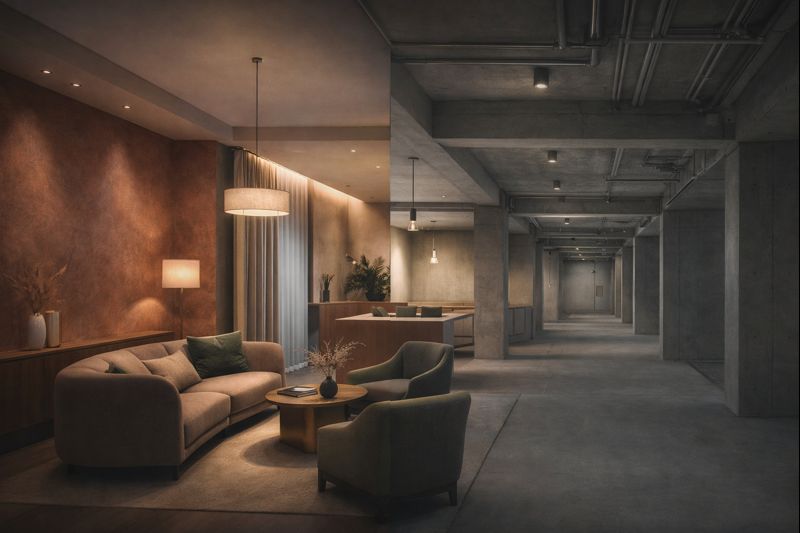
Each change feels reasonable. None feel catastrophic. But together, they reshape the interior into something noticeably different from what the client approved.
Designers often sense this loss only when the space is nearly built—when restoring intent is no longer realistic.
This article explains why interior design coordination is where concepts quietly erode, and how early clarity—not stricter control—prevents late compromise.
Why Coordination Is the Most Dangerous Phase for Interiors
Coordination is where interior design meets reality.
At this stage, interiors must coexist with:
- structural depths
- MEP routing
- fire and life safety
- accessibility requirements
- construction sequencing
The problem is not coordination itself. It’s that interior intent often enters coordination under-defined.
When intent is vague, coordination decisions default to convenience. When intent is clear, coordination becomes negotiation.
The Difference Between “Looks Approved” and “Is Understood”
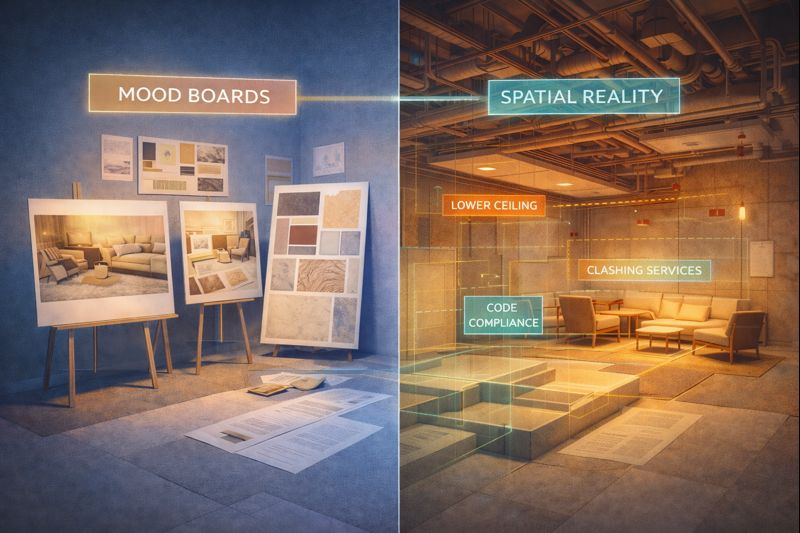
Many interior concepts are approved visually but not understood spatially.
Clients approve mood.
Consultants coordinate geometry.
Contractors build dimensions.
If the interior intent exists mainly in renders or boards, it lacks the clarity required to survive technical pressure. Coordination teams are not trying to dilute design—they’re trying to make it work.
Without early clarity, design intent has no leverage.
Where Interiors Lose Control During Coordination
Interior design typically loses ground in three places:
First, in ceilings
Ceilings carry the heaviest coordination load. Lighting, diffusers, sprinklers, structure, access panels—all compete for limited depth. If the original intent didn’t account for this reality, compromises arrive quickly.
Second, in lighting
Lighting is often adjusted last. When conflicts arise, fixture types, spacing, or intensity are altered to fit constraints—often changing the atmosphere entirely.
Third, in furniture and circulation
Furniture layouts that felt generous on plans can feel tight once clearances, accessibility, and real dimensions are enforced. Adjustments then cascade through the space.
These are not mistakes. They are outcomes of late understanding.
Why Early Clarity Changes the Power Dynamic
Early clarity doesn’t mean finalizing details. It means making intent visible enough to defend.
When interior teams establish clarity early:
- consultants understand priorities
- trade-offs are discussed openly
- compromises are intentional, not accidental
Coordination shifts from “What can we fit?” to “What must we protect?”
This is a subtle but powerful change.
How Early Visualization Supports Better Coordination
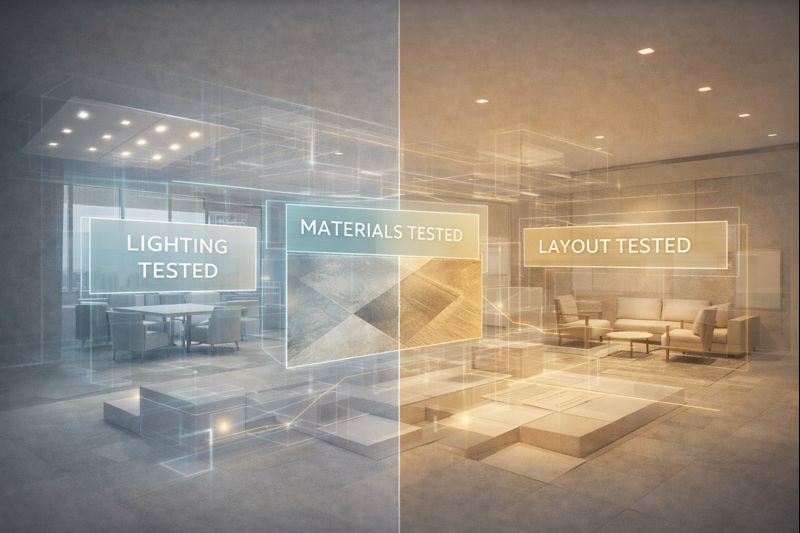
Early visualization allows interior teams to:
- sense ceiling pressure before services are fixed
- understand lighting behavior in context
- evaluate furniture density realistically
- anticipate where flexibility exists
This doesn’t eliminate coordination challenges. It prepares teams for them.
AI-assisted interior visualization accelerates this process by making combined decisions visible early, when change is still affordable and collaborative.
And when those clarified concepts need to move into deeper coordination, validation, and delivery workflows, platforms like Ruwaq Design provide continuity—connecting interior intent with AEC execution without forcing redesign.
Why Contractors Respond Better to Clear Interior Intent
Contractors don’t push back on design quality. They push back on ambiguity.
When interior intent is clear early:
- coordination discussions are shorter
- value engineering becomes targeted
- alternatives are evaluated against intent, not cost alone
This reduces friction and builds trust.
A contractor who understands why something matters is more likely to help protect it.
Approval That Holds Is Better Than Approval That’s Fast
Fast approvals feel efficient. But weak approvals unravel.
Early clarity leads to approvals that:
- reflect real spatial understanding
- anticipate coordination constraints
- align expectations across teams
These approvals hold up under pressure, reducing late changes and disputes.
Interior Design Becomes a Negotiation, Not a Defense
When interior teams enter coordination with clarity, they don’t spend energy defending ideas after the fact.
They participate in negotiation early—deciding:
- where flexibility exists
- where it doesn’t
- what trade-offs are acceptable
This preserves design character even under constraint.
Conclusion: Interiors Don’t Need Control—They Need Clarity
Interior design doesn’t fail because teams lose control.
It fails because clarity arrives too late.
Early clarity—visual, spatial, and intentional—changes how coordination unfolds. It transforms compromise into choice and rework into refinement.
AI-assisted interior workflows support this shift by accelerating understanding, not by automating decisions.
Interiors that survive coordination are not the ones that resist reality.
They are the ones that engage it early.