Introduction: Where Interiors Quietly Start to Drift
Most interior projects don’t fail in dramatic ways. They drift.
A lighting idea is adjusted to fit services.
A material is swapped due to availability.
A layout tightens to meet clearance.
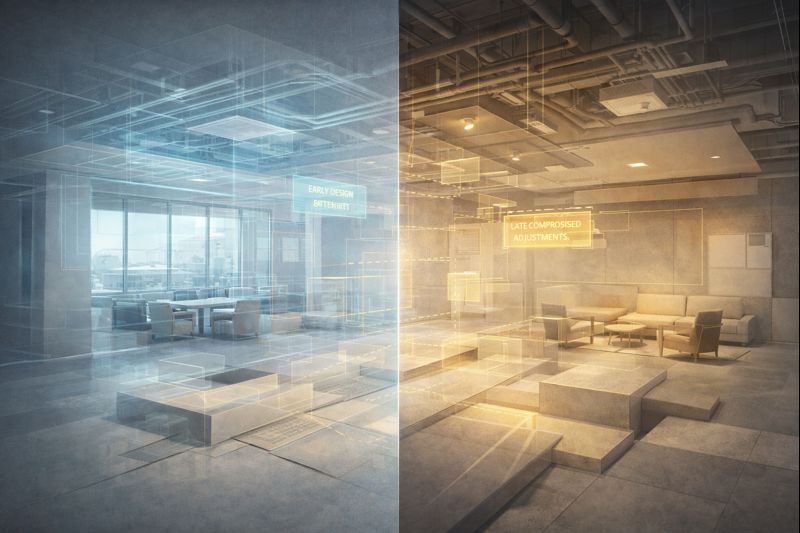
None of these changes seem critical on their own. But together, they reshape the interior into something noticeably different from what was approved.
By the time this drift becomes obvious, the project is already deep into coordination. Reversing course is expensive, politically difficult, and sometimes impossible.
The common thread behind these late changes is simple: key interior decisions were approved before they were properly tested together.
Why Interiors Are Often Designed in Pieces
Interior workflows tend to separate decisions:
- layout first
- materials later
- lighting last
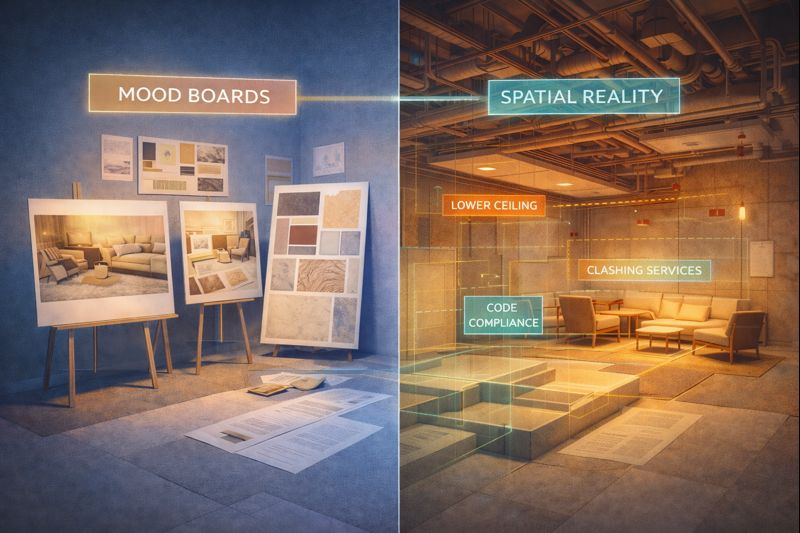
This sequencing feels logical, but it creates blind spots. Each layer affects the others in ways that aren’t always obvious on drawings or mood boards.
A lighting concept might assume ceiling depth that the layout can’t support. A material choice might alter reflectance and change the lighting effect. Furniture density might quietly break circulation or code.
When these relationships aren’t tested early, problems wait patiently for coordination to expose them.
The Cost of Discovering Conflicts Too Late
Late discovery creates a specific type of rework:
- redesign without enthusiasm
- compromises without clarity
- fixes driven by constraint rather than intent
Designers spend energy defending decisions instead of refining them. Consultants propose alternatives without fully understanding the original concept. Clients sense inconsistency and begin to question approvals they already gave.
The cost is not just time or money. It’s confidence.
Why Early Testing Changes the Trajectory of a Project
Early testing doesn’t mean finalizing details. It means seeing interactions before they harden.
When designers visualize lighting, materials, and layout together early:
- spatial pressure becomes visible
- lighting intensity feels real
- material scale reads correctly
- furniture density is obvious
Design intuition sharpens because feedback arrives sooner. Designers don’t need to wait for shop drawings to realize something feels wrong.
That timing difference is the difference between refinement and rework.
Lighting Is the First Thing to Break—and the Hardest to Fix
Lighting concepts are especially vulnerable because they sit at the intersection of design and engineering.
A beautiful lighting idea can unravel quickly when:
- ceiling voids are reduced
- fixtures conflict with structure
- glare becomes an issue
- energy requirements intervene
When lighting is tested only after layout and materials are locked, options are limited. Early visualization allows designers to sense lighting behavior in context—before constraints force compromises.
Materials Behave Differently at Real Scale
Materials that look convincing on boards or close-up renders can behave very differently when applied across a space.
Texture repetition, reflectivity, color dominance, and wear expectations are all scale-dependent. Early interior visualization helps designers judge whether a material choice will enhance or overwhelm the space.
This is not about photorealism. It’s about proportion and presence.
Layout Decisions Shape Everything That Follows
Layout feels straightforward on plans, but its consequences ripple outward.
Furniture density affects:
- circulation comfort
- accessibility compliance
- lighting coverage
- acoustic behavior
Early testing helps designers feel these impacts before documentation begins. Instead of discovering conflicts during coordination, teams resolve them while intent is still flexible.
How AI Interior Visualization Supports Early Testing
AI-assisted interior tools accelerate this early testing phase by making combined decisions visible quickly.
Designers can:
- test a lighting mood within a real-looking space
- see how materials interact with light
- evaluate layout comfort visually
- adjust direction without restarting
This doesn’t replace drawings or calculations. It prepares designs so those later steps proceed with fewer surprises.
And when these tested concepts need to connect to coordination, validation, and delivery workflows, platforms like Ruwaq Design provide continuity—ensuring early intent survives downstream processes.
Why Early Testing Leads to Better Approvals
Clients don’t approve details—they approve understanding.
When interiors are tested early:
- approvals are more informed
- expectations are clearer
- trust is stronger
Clients who understand the spatial and lighting implications of a concept are less likely to reverse decisions later. Approval quality improves, not just speed.
Interior Design Becomes More Predictable Without Becoming Rigid
Early testing doesn’t lock designs. It stabilizes them.
Designers retain freedom to adjust, but they do so knowingly. Decisions are made with awareness of consequences, not optimism.
This is how interiors maintain character under pressure.
Conclusion: Rework Is a Timing Problem, Not a Talent Problem
Interior designers don’t struggle because they lack skill. They struggle because feedback arrives too late.
Testing lighting, materials, and layout together—early—changes everything. It transforms rework into refinement and coordination into collaboration.
AI-assisted interior visualization supports this shift by making interactions visible when they still matter.
Good interiors are not just imagined.
They are tested early and protected through delivery.