Introduction: When Approved Interiors Start Falling Apart
Almost every interior designer has lived through this moment.
The client loved the mood board.
The renders were approved.
The direction felt locked.
Then coordination began.
Suddenly:
- ceiling heights don’t work
- lighting layouts clash with services
- materials need to be swapped
- furniture clearances fail code
- acoustics get compromised
And the interior that once felt confident starts losing its identity piece by piece.
This isn’t bad luck.
It’s a structural flaw in how interior concepts are traditionally developed.
Mood Boards Are Emotional Tools — Not Spatial Ones
Mood boards are powerful. They communicate:
- atmosphere
- tone
- texture
- aspiration
But mood boards don’t communicate:
- scale
- clearance
- coordination
- services impact
- construction tolerance
They are emotional approvals, not spatial validations.
When mood boards become the primary decision-making tool, interiors get approved for how they feel, not how they function.
That gap doesn’t show up immediately.
It shows up during coordination—when change is expensive.
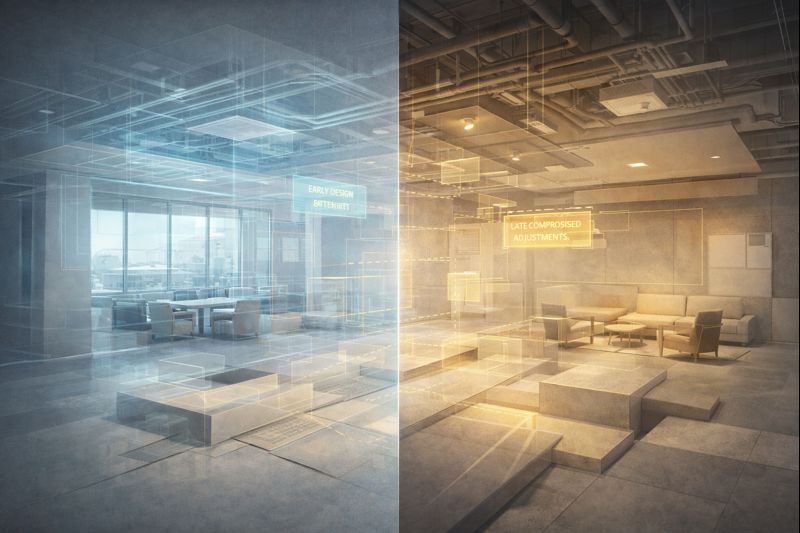
Why Coordination Is Where Interiors Get “Value Engineered”
Interior design rarely collapses all at once.
It erodes.
One adjustment seems reasonable:
- “We’ll lower the ceiling slightly.”
- “We’ll change the lighting type.”
- “We’ll simplify this detail.”
Individually, each change is small.
Collectively, they transform the space.
Designers often feel their work is diluted not because it was weak—but because it was never fully spatially validated before coordination pressure began.
The Core Problem: Approval Without Understanding
Clients don’t approve interiors because they understand construction.
They approve because they trust the visual story.
Contractors don’t build interiors because they feel the mood.
They build what fits, clears, and coordinates.
Interior designers sit between these two realities.
When approval happens without spatial clarity, designers are forced to defend intent later—when leverage is gone.
Why AI Interior Visualization Changes This Equation
AI interior design tools introduce spatial awareness earlier, not later.
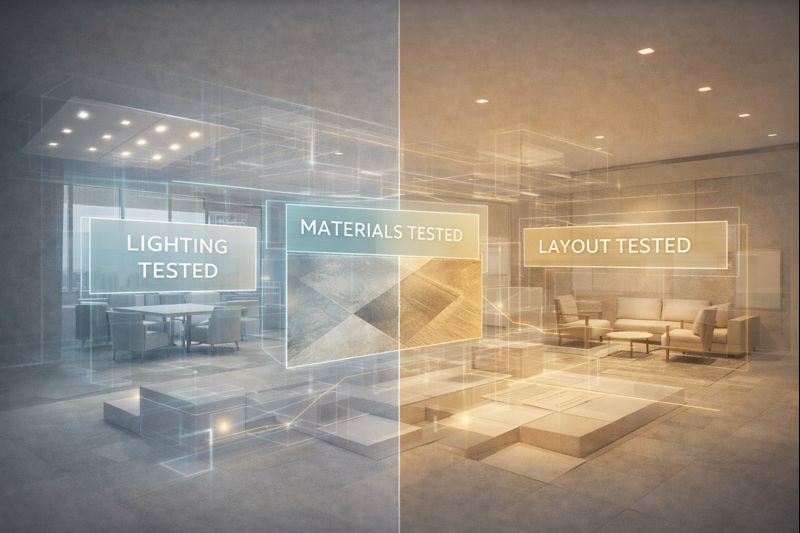
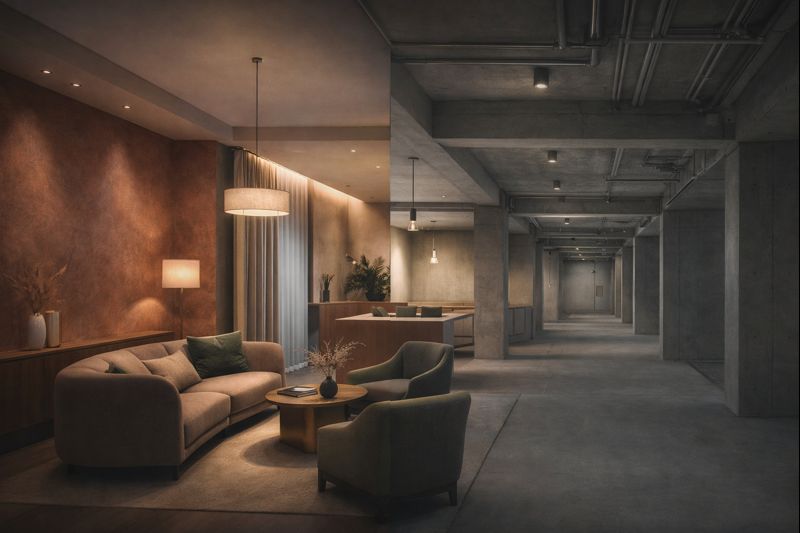
Instead of mood boards existing in isolation, AI-generated interiors allow designers to:
- visualize scale realistically
- sense ceiling depth early
- see lighting behavior in context
- test furniture density visually
This doesn’t replace coordination drawings.
It prepares designs for them.
Design intent becomes visible before consultants start negotiating constraints.
Seeing Problems Before They Become Conflicts
When designers see interiors rendered quickly and realistically, they instinctively notice:
- when ceilings feel too tight
- when spaces feel overcrowded
- when materials feel unrealistic at scale
- when lighting feels insufficient
These insights used to arrive during shop drawings or site coordination. Now they arrive while the design is still flexible.
That timing change is everything.
Why Consultants Respond Better to Clear Interior Intent
Consultants don’t resist interior design—they resist ambiguity.
When interiors are clearly visualized early:
- lighting engineers understand intent
- MEP teams see where flexibility exists
- acoustic consultants anticipate challenges
- structural teams understand ceiling logic
AI-assisted visuals act as a shared reference, reducing interpretation gaps that usually lead to compromise.
Interior Design Stops Being Defensive
When spatial clarity exists early, interior designers stop reacting to coordination problems and start leading coordination discussions.
Instead of:
“We need this to work somehow…”
The conversation becomes:
“This is the intent. Where can we adjust without breaking it?”
That shift protects design quality.
How interioraec.com Positions This Conversation
The role of interioraec.com is to explain why interior design struggles at the coordination stage—and how better early visualization prevents it.
This is not about selling tools.
It’s about reframing interior design as a system, not a surface.
And when those systems need to connect to deeper AEC workflows—validation, coordination, delivery—that’s where platforms like Ruwaq Design naturally extend the process without disconnecting design intent.
Conclusion: Interiors Don’t Fail — Timing Does
Interior concepts don’t break because they’re unrealistic.
They break because spatial understanding arrives too late.
Mood boards will always matter. But without early spatial validation, they leave designers exposed during coordination.
AI-assisted interior visualization doesn’t replace creativity.
It protects it—by aligning emotion with reality before compromise begins.